The Question Everyone Asks But Nobody Answers Honestly
"I've never done this before. What actually happens?"
Last week, a successful business owner asked us this whilst booking their first private jet. They'd built a company worth millions, negotiated complex international deals, and managed hundreds of employees. But the idea of booking a private jet made them genuinely nervous.
Their concern wasn't cost. It was the fear of looking foolish, asking stupid questions, or inadvertently breaking unwritten rules that "everyone who flies private just knows." This anxiety stops more people from trying private aviation than price ever does.
Here's the complete, honest walkthrough of what actually happens when you book your first private jet, including answers to questions you're probably too embarrassed to ask out loud.
Before You Even Contact Anyone: The Mental Preparation
Let's address the elephant immediately. You're probably wondering if you're "rich enough" or "important enough" to fly privately. Here's the truth that nobody tells first-time flyers.
Private Aviation Serves Remarkably Diverse Clients
The mental image of private jet passengers typically involves billionaires, celebrities, or corporate titans. Reality is substantially more varied. We coordinate flights for regional business owners making their first international expansion, families handling complex medical situations requiring flexible travel, sports teams needing group transportation, and professionals who've calculated that time savings justify the investment for specific journeys.
The wealth threshold isn't what you imagine. If you can afford a luxury holiday, a premium car, or other discretionary luxuries, you can probably afford occasional private aviation for journeys where it genuinely makes sense. This doesn't mean private jets are cheap, but they're not exclusively for the ultra wealthy either.
"I assumed private jets were for people substantially wealthier than me. Then I calculated what we spent on commercial first class tickets, hotels for overnight stays we wouldn't need with private aviation, and the value of time we'd recover. The numbers were closer than I expected." — Technology consultant, first-time charter client
You're Allowed to Ask Questions
This sounds obvious, but the anxiety about appearing inexperienced stops people from asking perfectly reasonable questions. Every single person who flies private regularly flew for the first time once. They asked the same questions you're wondering about now.
We prefer first-time clients who ask questions over those who pretend familiarity they don't possess. Understanding your actual concerns helps us coordinate better experiences. "I've never done this, what should I expect?" is the best possible way to start any conversation about your first private flight.
The Actual Booking Process: Step by Step Reality
Here's exactly what happens from the moment you decide to explore private aviation through to actually boarding your first flight.
Step One: Initial Contact and Requirements Discussion
You contact us via our website, email, or phone. The first conversation focuses on understanding your actual requirements rather than selling you anything immediately. We need to know:
Where are you flying from and to? Simple question, but the answer affects everything else. London to Paris requires very different aircraft than London to Dubai.
When do you need to travel? Specific dates, or are you flexible? Flexibility often creates better options and competitive pricing.
How many passengers? Just you, you plus colleagues, your family? Passenger count influences aircraft selection substantially.
Any special requirements? Medical conditions requiring specific accommodations, pets travelling with you, unusual luggage like sports equipment or musical instruments, dietary restrictions for catering?
This conversation typically lasts 10 to 15 minutes. You're not committing to anything yet. We're simply gathering information needed to provide accurate options.
Step Two: Aircraft Options and Transparent Pricing
Based on your requirements, we present aircraft options with complete transparency about what each choice offers and costs. This isn't a single "take it or leave it" quote. You'll typically see two or three options ranging from most economical to most comfortable.
For a London to Geneva flight with three passengers, for instance, we might present:
A light jet that accomplishes the journey efficiently with comfortable but compact cabins. This represents the most economical option whilst delivering the core private aviation benefits of time savings and flexibility.
A midsize jet offering more cabin space, better amenities, and perhaps newer aircraft with superior technology. This costs more but provides enhanced comfort for the 90 minute flight.
The pricing we provide includes everything. Landing fees, handling charges, catering, crew costs, and any other expenses. The quote you receive is the price you pay. No hidden charges appear later.
We explain what each aircraft type actually means in practical terms. "Light jet" is industry terminology, but what you care about is whether the seats are comfortable, whether you can stand up fully in the cabin, and whether there's proper lavatory facilities versus basic chemical toilets.
Step Three: The Questions You're Probably Afraid to Ask
At this point, first-time clients often have questions they're hesitant to voice. Let's address them directly.
Do I tip the crew? Tipping culture in European private aviation is less established than American practices. Crew are well compensated, and service charges are included in your quote. If crew provide exceptional service, modest tips are appreciated but never expected. You won't offend anyone by not tipping, and you won't look foolish if you do. There's genuinely no wrong answer here.
What do I wear? Whatever you'd wear for a business meeting or nice dinner. Private aviation has no dress code. We've coordinated flights for clients in everything from formal business attire to casual weekend clothing. Wear what's comfortable and appropriate for your destination activities rather than trying to dress for the aircraft.
Can I bring my own food and drinks? Absolutely. Many clients bring specific snacks, dietary items, or preferred beverages. The aircraft is yours for the duration of the flight. However, we also coordinate catering if you prefer, ranging from simple refreshments to full meals from quality restaurants.
What if I need to cancel or change dates? Cancellation and modification policies vary by operator and how far in advance you're booking. We explain these terms clearly before you confirm anything. Generally, more flexibility costs more, whilst locked in dates offer better pricing but less ability to change plans.
Step Four: Confirmation and Payment
Once you've selected your preferred option, we confirm the booking with the aircraft operator. You'll receive detailed confirmation including:
Aircraft registration and type
Departure airport and terminal (typically the FBO, not commercial terminals)
Departure time (when you should arrive, not when the aircraft takes off)
Estimated flight duration and arrival time
Ground transportation arrangements if you've requested them
Catering details if applicable
Contact information for our operations team who monitor your flight
Payment terms vary by operator. Some require full payment in advance. Others accept deposits with final payment before departure. We coordinate all payment logistics and provide proper invoicing for business expense tracking if needed.
Step Five: Pre-Flight Preparation
In the days before your flight, we coordinate any final details. If you've requested specific catering, ground transportation, or other services, these get confirmed. You'll receive final timing confirmation and any relevant updates.
For international flights, we coordinate customs and immigration requirements. You'll need proper documentation (passports, visas if applicable), but the processing happens at the FBO rather than through commercial terminals. We explain exactly what you need and when you need it.
The day before departure, you'll typically receive final confirmation with any updates to timing or logistics. Our operations team monitors weather and air traffic to identify potential issues before they affect your journey.
Departure Day: What Actually Happens at the Airport
This is where private aviation diverges most dramatically from commercial travel. Everything you know about airports and flying gets turned sideways.
Arrival at the FBO: The First Surprise
You arrive at the private jet terminal, called an FBO, rather than the commercial airport terminal. If you're departing from London Farnborough, for instance, you drive directly to the Farnborough facility. If you're departing from a major airport like London City or Paris Le Bourget, the FBO is a completely separate building from commercial terminals.
You arrive 15 to 20 minutes before departure time. Not two hours early. Not 45 minutes for short flights. Actually 15 to 20 minutes. First-time clients often arrive much earlier because this timing feels impossible if you're accustomed to commercial aviation.
At some FBO facilities, particularly dedicated business aviation airports, your vehicle drives airside directly to your aircraft. You literally step from your car to your jet. At larger airports, you park at the FBO and walk through their facility to your aircraft.
Security and Customs: Nothing Like Commercial Aviation
Security exists but operates completely differently. There's no removing shoes, belts, or laptops. No queuing behind dozens of other passengers. No aggressive questioning about liquids or electronics.
You and your belongings pass through security screening, typically taking 60 seconds total. The process ensures safety without the theatre and friction of commercial security.
For international flights, customs and immigration officers process your documents at the FBO. You're not joining queues with hundreds of other passengers. The entire process typically completes in five minutes or less, often whilst you're enjoying coffee in the FBO lounge.
The FBO Lounge: Actually Comfortable
Whilst your aircraft is prepared for departure, you wait in the FBO lounge. This isn't a commercial airport lounge serving hundreds of passengers. It's a genuinely comfortable space, often resembling upscale hotel lobbies more than airport facilities.
Complimentary refreshments including quality coffee, soft drinks, and usually alcoholic beverages. Comfortable seating where you can actually relax or work. Many FBOs provide meeting rooms if you need private space for calls or final preparations.
At premium FBOs, staff know you're there and monitor your flight preparation. When your aircraft is ready, they'll inform you directly rather than making announcements over loudspeakers or expecting you to watch departure boards.
Boarding: Simpler Than You Imagine
When it's time to board, you simply walk to your aircraft. Sometimes this means walking across the tarmac to your jet. Other times, particularly at larger airports, you might board through a small terminal gate similar to commercial aviation but serving only your flight.
Nobody checks boarding passes multiple times. Nobody announces boarding groups. You and your fellow passengers simply board when ready. The crew welcomes you, helps with any luggage you're carrying aboard, and ensures you're comfortable before departure.
The moment of boarding often surprises first-time private aviation passengers. There's no cattle-call feeling. No rushing to secure overhead bin space. No squeezing past dozens of other passengers. You board your aircraft the way you'd enter a friend's car, casually and without ceremony.
Landing and Arrival: The Exit That Actually Impresses
Your flight lands. Here's what happens next, and why this might be the most impressive part of the entire experience.
Immigration and Customs: Minutes, Not Hours
For international arrivals, you clear customs and immigration at the FBO. Officers come to you rather than you joining queues at commercial terminals. The entire process typically completes in five minutes.
You've prepared proper documentation (passports, customs declarations if required). Officers verify everything, stamp passports, and you're done. No queues. No waiting. No cattle herding through endless corridors.
This efficiency matters enormously for business travellers with tight schedules. Landing in Paris at 10:00 means you're leaving the airport by 10:15, not 11:30 after commercial processing and baggage collection.
Ground Transportation: Waiting for You
If you've arranged ground transportation through us, your vehicle waits at the FBO. In some cases, particularly at dedicated business aviation airports, your car drives airside and meets you at the aircraft steps. You walk from jet to vehicle in 30 seconds.
At larger airports, you walk through the FBO to your waiting vehicle. Either way, you're driving away from the airport within 10 to 15 minutes of landing.
Compare this to commercial arrivals: land, taxi to gate, wait for jetway, walk through corridors, collect baggage, clear customs, find ground transportation. Total time: 45 minutes to 90 minutes depending on airport and time of day.
The Time Calculation That Justifies Everything
Here's the honest calculation for a typical European business flight, London to Geneva for instance:
Commercial first class: Arrive Heathrow 90 minutes before departure. Security and boarding: 30 minutes. Flight time: 90 minutes. Arrival, baggage, customs, ground transport: 60 minutes. Total: four hours door to door.
Private aviation: Arrive Farnborough 15 minutes before departure. Boarding: immediate. Flight time: 90 minutes. Arrival and ground transport: 15 minutes. Total: two hours door to door.
Two hours saved on a single journey. If you make this trip monthly, that's 24 hours annually recovered. What's a full day worth in your business or personal life? For many people, this calculation alone justifies private aviation for routes they travel regularly.
The Honest Cost Reality: What First-Timers Actually Pay
Let's address the question everyone wonders but hesitates to ask directly: what does this actually cost?
Understanding the Pricing Structure
Private jet pricing isn't like buying airline tickets where you pay per seat. You're chartering the entire aircraft, so costs depend on aircraft size, journey distance, and operational requirements rather than passenger count.
A light jet for London to Paris might price in a range that makes it accessible for three or four business travellers splitting costs. The same aircraft for London to Dubai would cost substantially more due to the longer flight time and positioning requirements.
We provide completely transparent pricing showing exactly what you're paying for. The quote includes all operational costs: landing fees, handling charges, crew expenses, fuel, catering, and any other charges. You never receive unexpected bills after your flight.
When Private Aviation Makes Financial Sense
Private jets aren't always the most economical choice. We're honest about this. For a solo traveller on a route with excellent commercial service and flexible timing, commercial first class might be more sensible.
Private aviation justifies its cost in specific situations:
When you're travelling as a group and can split costs. Four executives sharing a light jet might pay similar amounts per person to commercial business class whilst saving substantial time.
When schedule flexibility is essential. If your meeting schedule drives your travel timing rather than airline schedules dictating when you can meet, the ability to depart exactly when needed creates value beyond simple cost comparisons.
When your time has significant monetary value. Senior executives whose hourly rates are substantial might find that the time recovered through private aviation pays for itself through increased productivity.
When privacy is genuinely necessary. Confidential business discussions that cannot happen in commercial first class create value that's difficult to quantify but absolutely real.
The Empty Leg Opportunity for First-Timers
We often recommend first-time private aviation users try empty leg flights if their schedule allows flexibility. Empty legs occur when aircraft reposition between charters, creating opportunities to fly at substantially reduced rates.
Empty leg pricing can make private aviation accessible to first-timers who want to experience the service before committing to full charter rates. The aircraft, service, and experience are identical. The only difference is reduced cost in exchange for less scheduling flexibility.
The Questions You Have After Your First Flight
Most first-time private aviation clients contact us within days of their inaugural flight. Not because anything went wrong, but because the experience changed their thinking about travel fundamentally.
Will I become a regular private flyer?
This depends entirely on your specific situation. Some clients use private aviation occasionally for routes where it makes particular sense. Others transition to regular private flying once they experience the time savings and reduced friction.
There's no pressure to become a frequent flyer. We work with clients who charter once annually for special occasions alongside those who fly privately weekly for business. Both groups receive identical service and attention.
Can I bring friends or family members on business flights?
Generally yes, if the aircraft has capacity. Many business travellers bring spouses or family members on trips that combine business with personal time. The marginal cost of additional passengers is minimal since you're already chartering the aircraft.
Some corporate policies restrict mixing business and personal travel. We can coordinate separate invoicing or documentation if your company requires clear business expense separation.
How do I explain private aviation to colleagues or friends?
You don't owe anyone explanations about your travel choices. However, many first-time flyers feel self-conscious about flying privately, particularly if they're concerned about perceptions of excess or environmental impact.
The honest answer when questioned: private aviation is a business tool that saves time and enables productivity in ways commercial aviation cannot match. For specific routes and situations, the investment justifies itself through recovered time and increased efficiency.
What about the environmental concerns?
Private aviation does produce higher per-passenger emissions than commercial flights. This is factually accurate, and we don't pretend otherwise. However, the complete calculation includes several factors:
Many private aviation users would otherwise fly commercial first class, which has per-passenger emissions approaching private jet levels due to the space those seats consume.
The productivity and time savings that private aviation enables might reduce other environmental impacts through fewer hotel stays, reduced ground transportation, and consolidated travel that would otherwise require multiple trips.
Sustainable aviation fuel is increasingly available, though still limited. We coordinate SAF usage for clients who prioritise environmental considerations.
Carbon offset programmes allow you to support verified environmental projects that compensate for flight emissions.
We provide transparent environmental information and coordinate whatever mitigation approaches align with your values. Different clients make different decisions based on their priorities and circumstances.
Making It Real: Your First Private Flight
If you've read this far, you're genuinely interested in trying private aviation rather than just curious about how it works. Here's the practical path from interest to your first flight.
Start With a Specific Journey Rather Than Abstract Interest
Don't begin with "I'd like to try private aviation sometime." Begin with "I need to be in Frankfurt for morning meetings and back in London by evening." Specific requirements lead to appropriate solutions and accurate pricing.
The first flight shouldn't be your most important business trip or once in a lifetime holiday. Choose a journey where the stakes are moderate, allowing you to experience private aviation without the pressure of critical timing or enormous expectations.
Ask Every Question That Occurs to You
We prefer clients who ask dozens of questions over those who pretend familiarity. Understanding your concerns, preferences, and expectations helps us coordinate better first experiences.
There are no stupid questions. Every regular private aviation user asked the same things during their first booking. "Where exactly do I go at the airport?" is perfectly reasonable. So is "What happens if I arrive early?" or "Can I bring my dog?"
Trust the Process
Your first private flight will feel strange because it contradicts everything you know about air travel. Arriving 15 minutes before departure feels wrong. Walking straight to your aircraft without security queues feels like you're breaking rules. The casual, efficient boarding process feels too easy.
Trust that this is how private aviation actually works. The efficiency isn't an accident or a shortcut. It's the fundamental design of private aviation operations.
We coordinate hundreds of first-time private flights annually. We understand the nervousness, the questions you're hesitant to ask, and the moments that feel confusing. Our role is ensuring your first experience exceeds expectations whilst feeling natural rather than intimidating.
Book your private flight now and discover why first-time private aviation passengers typically become regular users once they experience the actual reality versus their assumptions.
For detailed first-timer guidance and answers to your specific questions, contact us at [email protected] or [email protected]. We're available round the clock to make your first private aviation experience genuinely excellent.
Image Attribution:
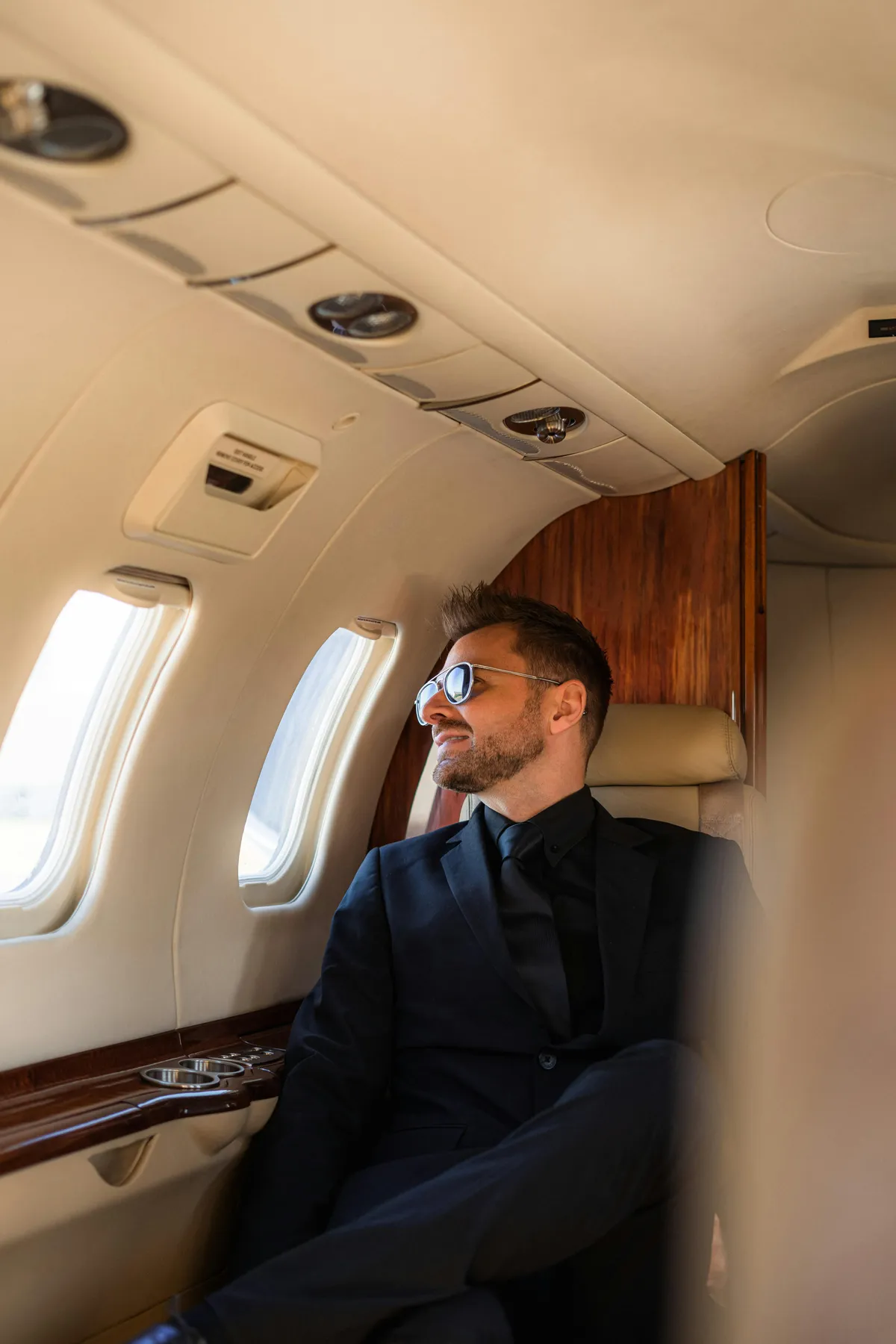
"Businessman" by Francois Joubert, used under Pexels License.