Introduction
Private jet passenger capacity can range from a handful of seats in a very light jet to around nineteen in many purpose-built large-cabin business jets. Converted airliners can carry more, but they form a specialist charter category. The number in a brochure is only the certified or offered maximum. A sensible charter choice also considers cabin layout, crew seats, baggage, range and whether passengers can work or rest comfortably.
This guide explains the practical answer, the checks behind it and the information Private Flights needs to arrange a suitable charter.
The Direct Answer and Key Evidence
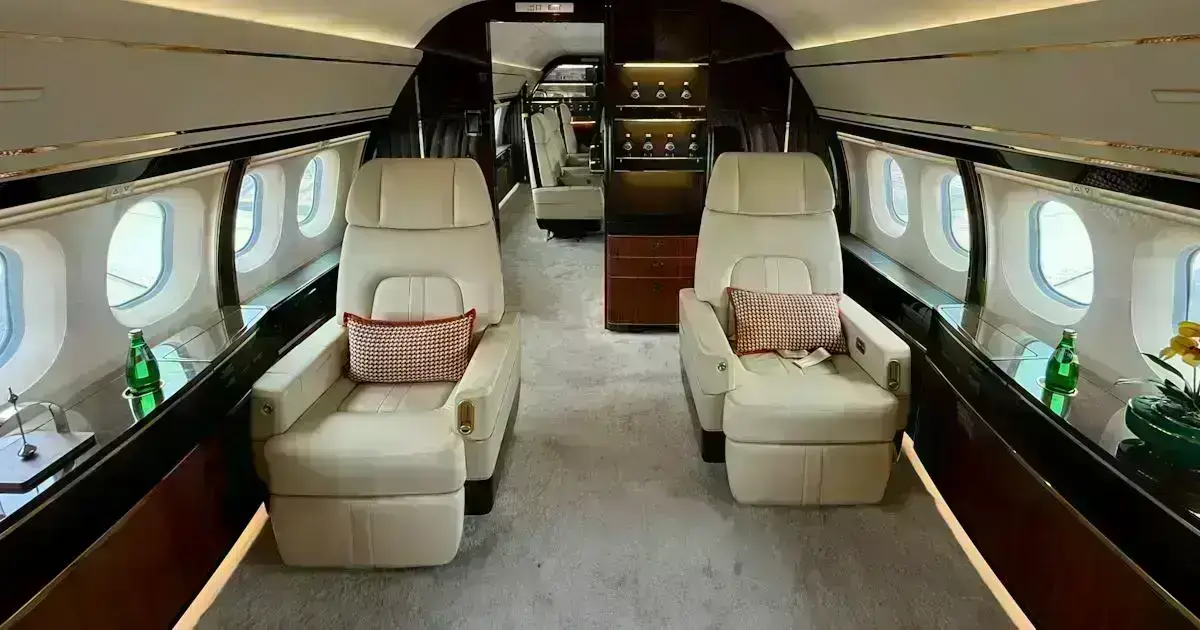
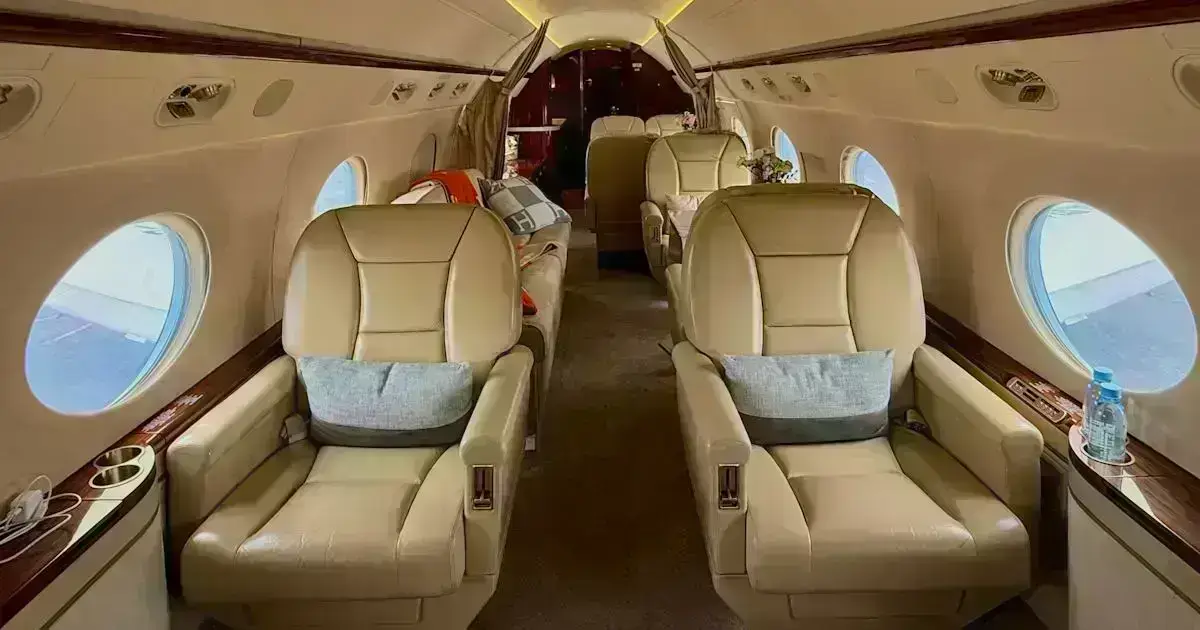
Typical charter categories overlap. Very light and light jets often seat about four to seven passengers; midsize and super-midsize aircraft commonly accommodate six to ten; heavy and ultra-long-range jets may be configured for roughly ten to nineteen. Exact seating varies by tail number. A divan counted for take-off may not provide the same comfort as an individual club seat on a long flight.
Every passenger needs an approved seat or berth for the relevant phase of flight, and the aircraft must remain within weight and balance limits. Long-range fuel, baggage and runway conditions can reduce practical payload. The operator confirms the legal passenger count for the actual aircraft and mission.
The correct answer is always tied to the specific operator, aircraft, route and date. A general possibility is not the same as an approved live charter.
What Determines Private jet passenger capacity?
- Certified seats: The aircraft records and cabin configuration determine the maximum number of occupied passenger positions.
- Comfortable seats: A layout can be legal at maximum capacity yet unsuitable for a lengthy business or overnight journey.
- Baggage volume: A full passenger cabin often means a full hold, especially when everyone brings rigid cases.
- Flight attendant: Some aircraft or service plans require a cabin attendant, which can affect available crew or service space.
- Range and payload: More passengers and bags can require a fuel stop or a different aircraft on longer sectors.
These factors interact. certified seats can look acceptable until comfortable seats changes, while baggage volume can make a different aircraft or airport more sensible. The quotation should therefore describe one complete operating plan instead of offering isolated cabin features. If a requirement is essential, it belongs in the first brief and the signed confirmation. Preferences that are genuinely optional should be labelled as such so the team can preserve alternatives.
A model name alone cannot settle the question. Tail numbers differ in seating, equipment, owner policy and current technical status. Route conditions also change from day to day. Private Flights checks the available aircraft with the operator and makes clear which details are confirmed, which remain requests and which depend on the captain or an authority.
Rules, Booking and Practical Preparation
Provide an exact passenger count, including infants and children, rather than saying the group is approximately ten. Describe the required seating: individual work seats, divans, beds, conference tables or accessible boarding. Confirm whether the quoted capacity includes crew. Private Flights requests a layout for the specific aircraft when configuration matters.
For a group close to a category limit, compare one larger aircraft with two smaller aircraft. One cabin keeps the party together, but two aircraft can provide schedule resilience or serve different onward destinations. The choice should consider airport slots, baggage distribution and ground transport, not only seats. Private Flights provides transparent quotes designed to compete strongly in the market for the complete plan.
A useful charter brief should include:
- Exact departure and final ground destination.
- Earliest departure and latest acceptable arrival.
- Legal passenger names and document status.
- Number, dimensions and type of bags or specialist items.
- Cabin, catering, connectivity and accessibility requirements.
- Return sectors, waiting time and acceptable alternate airports.
- The person authorised to approve a change.
Ask for important conditions in writing. Review cancellation and substitution terms before accepting. Keep traveller contacts available on the day, because a weather, slot or airport change can require a prompt decision. Related reading: fleet and popular charter jets.
A Real-World Scenario and Commercial Comparison
A nine-person leadership team requests a midsize jet because a search result lists nine seats. The proposed layout includes a compact belted lavatory position and limited baggage volume, making it poor for a three-hour working flight. Private Flights recommends a super-midsize cabin with nine proper seats and an accessible hold. The legal capacity was similar, but the useful capacity was not.
An airline separates the group across assigned seats and a public cabin. Charter can place colleagues or family together in a private, configured space. That advantage disappears if the aircraft is filled to a brochure maximum without regard to comfort. The best capacity is the number the cabin can serve well on the route.
The comparison should be fair. Scheduled travel can be entirely suitable for a flexible individual on a well-served route. Charter becomes more compelling when time, privacy, group coordination, specialist baggage or regional access changes the door-to-door calculation. Private Flights arranges private jet charters; it does not operate aircraft and does not promise that every request can be accepted.
Final planning review
Before confirming private jet passenger capacity, compare the proposed aircraft with the full door-to-door schedule. Check the specific cabin, baggage fit, departure slot, destination handling, crew plan and likely weather constraints. Confirm which requests are contractual and which remain subject to operational approval. A second suitable airport can protect the itinerary when the closest field has a curfew, short runway or limited customs hours. The traveller should also know who will communicate a change and by what deadline a decision is needed. Record the final passenger list and service brief in one place, then verify any late amendment with Private Flights before leaving for the terminal. This disciplined review preserves the flexibility that makes charter valuable while respecting the operator's responsibility for safety and compliance.
Frequently Asked Questions
What is the smallest private jet passenger capacity?
Very light jets can be configured for around four to six passengers, though exact usable seating depends on the aircraft.
Can a private jet carry 20 passengers?
Some VIP airliners and specialist aircraft can, but many purpose-built business jets are limited to nineteen or fewer.
Does a baby count as a passenger?
Yes for manifest and safety planning. Approved seating or restraint requirements depend on the rules and operator.
Can everyone sleep on an overnight private jet?
Not necessarily. Seat count is usually higher than berth count, so request a specific sleeping layout.
Conclusion and Sources
The central lesson is to replace assumptions with aircraft-specific confirmation. Private Flights can compare suitable charter options, coordinate the operator and explain the practical choices for private jet passenger capacity. To discuss a live itinerary, book your private flight now.
All charter arrangements are subject to aircraft and crew availability, operator approval, airport permissions, weather and operational constraints. Passengers remain responsible for passports, visas, declarations and other required documentation. Aircraft specifications and performance are confirmed by the operator for the live mission.
Sources consulted:
Image Attribution:
Photo by Andy Wang via Unsplash, used under the Unsplash Licence.