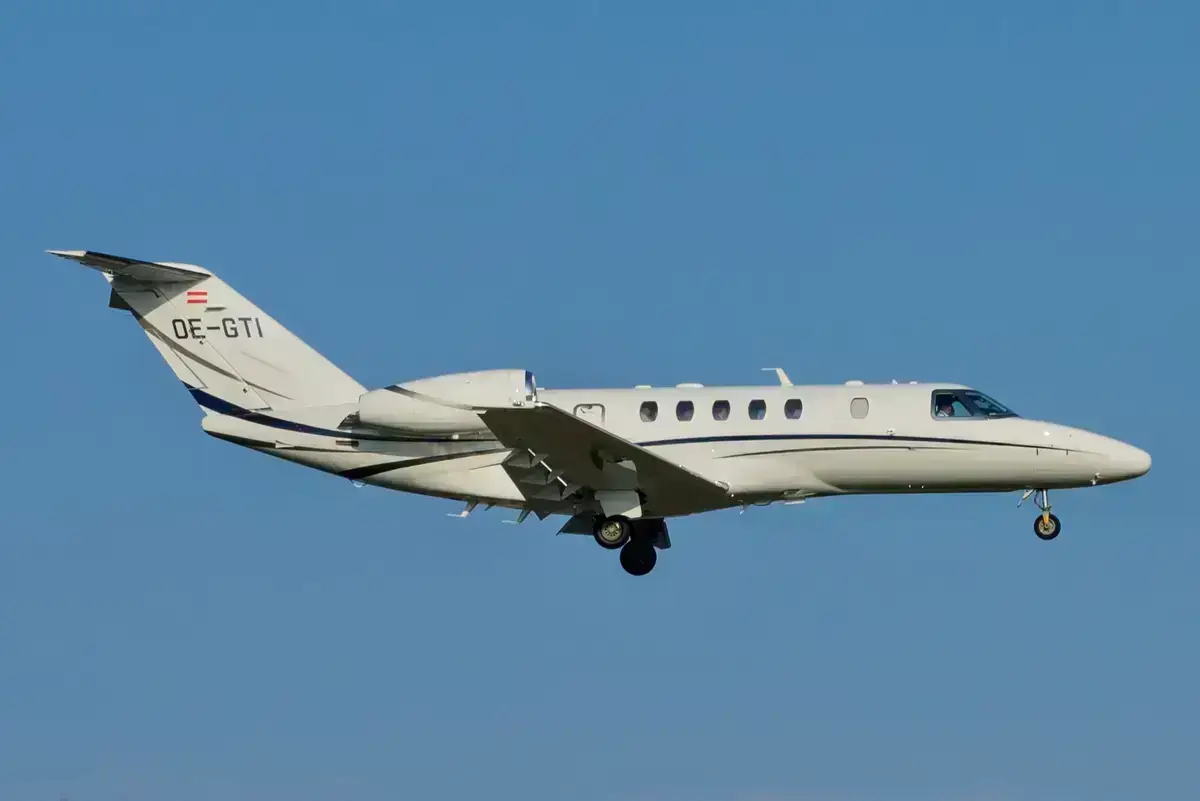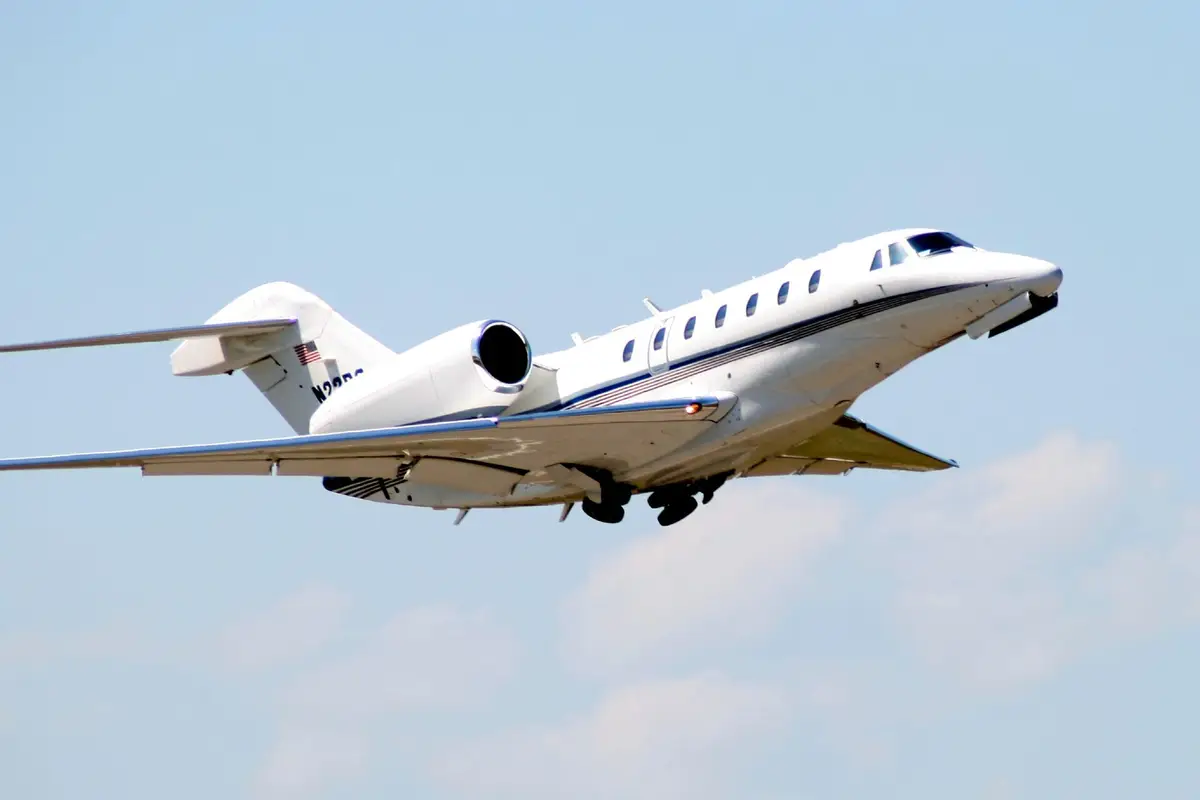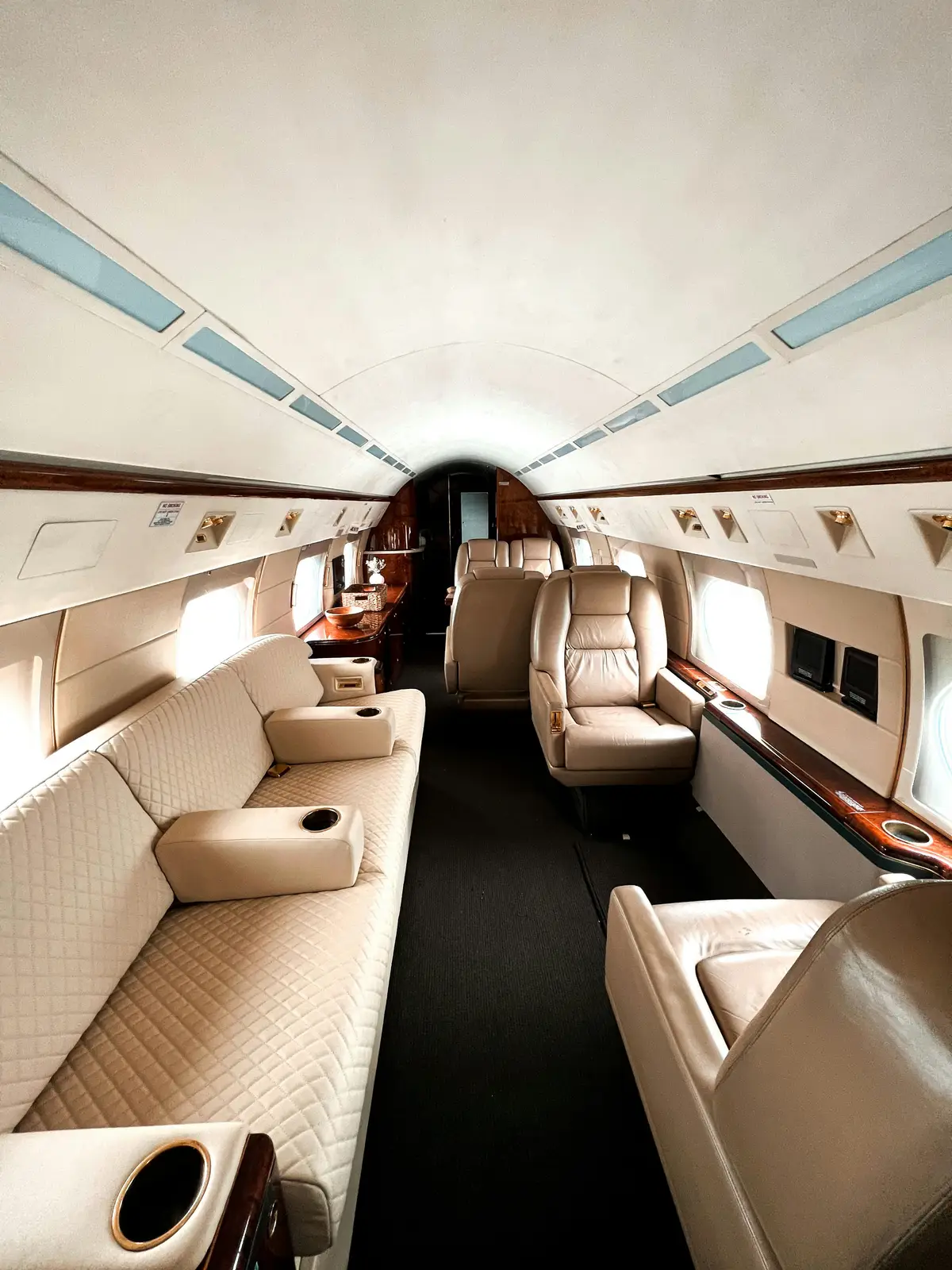
The best luxury private jet is not simply the newest or the largest. It is the aircraft that fits the route, passenger count, luggage, runway and cabin priorities without paying for capability the journey does not need.
This updated ranking combines our two previous luxury-aircraft guides into one practical comparison. It covers flagship jets for long intercontinental sectors, refined super-midsize aircraft and a versatile light jet for destinations larger aircraft cannot easily reach.
Published ranges below are manufacturer figures under specified conditions. Weather, routing, payload and reserves can reduce the distance available on a particular flight, so every charter must be matched to the actual mission.
What Defines a Luxury Private Jet?
Cabin size matters, particularly on an overnight flight, but comfort also depends on cabin altitude, noise, seating, light, connectivity and how the interior is configured. A large aircraft with the wrong layout can be less useful than a smaller jet with a proper working area and enough baggage capacity.
Four factors should lead the decision:
- Mission range: enough range for the route with appropriate reserves, without buying unnecessary capacity.
- Cabin layout: suitable spaces for work, dining, rest and privacy for the number of passengers travelling.
- Airport access: runway length, operating restrictions and proximity to the final destination.
- Availability and operator quality: a well-maintained aircraft from a properly vetted operator is more important than a particular badge.
1. Gulfstream G700 — The Flagship All-Rounder
The Gulfstream G700 combines a very large purpose-built business-jet cabin with a published maximum range of 7,750 nautical miles. It can have up to five living areas, seat up to 19 passengers and sleep up to 13, depending on configuration.
Twenty panoramic oval windows bring natural light into a cabin designed for long journeys. The combination of separate working, dining and sleeping zones makes the G700 especially compelling when several passengers need to use the cabin differently during the same flight.
Best for: ultra-long-range journeys where cabin flexibility, sleep and working space are all priorities.
2. Bombardier Global 7500 — Four-Zone Long-Range Comfort
Bombardier's Global 7500 offers a published maximum range of 7,700 nautical miles, a top speed of Mach 0.925 and four true living spaces. Typical layouts can include a club suite, conference area, entertainment zone and private rear suite.
Its Nuage seating and Smooth Flĕx Wing are designed to improve comfort on long sectors. The full-size kitchen and dedicated crew area also become meaningful on overnight or multi-sector itineraries, where service and rest matter more than they do on a short hop.
Best for: long intercontinental flights where distinct cabin zones and a permanent rest area are valuable.
3. Gulfstream G650ER — Proven Ultra-Long-Range Capability
The G650ER remains a frequent charter request because it pairs a 7,500-nautical-mile published maximum range with a mature global operating record. Its high-speed capability, low cabin altitude and broad support network have made it a benchmark for long-range business aviation.
Although the G700 is larger, the G650ER still offers ample space for working, dining and sleeping. For travellers who value proven availability over having the newest model, it can be the more practical choice.
Best for: established ultra-long-range performance and broad international availability.
4. Dassault Falcon 10X — A New Ultra-Wide Cabin
The Falcon 10X is Dassault's new twin-engine flagship. Dassault lists a 7,500-nautical-mile maximum range, a top speed of Mach 0.925 and a cabin 9 feet 1 inch wide and 6 feet 8 inches high. Its 38 large windows and modular three- or four-zone layouts are designed for abundant light and flexible use.
The aircraft was rolled out in 2026, so it should be considered separately from mature charter types with years of operational history. Its specifications make it a significant entrant, but availability must be confirmed for the intended travel date.
Best for: travellers following the newest large-cabin aircraft and operators planning future ultra-long-range capacity.
5. Dassault Falcon 8X — Long Range with Airport Flexibility
The Falcon 8X has a published range of 6,450 nautical miles and a three-engine configuration. Dassault's emphasis on short-field performance gives it an advantage for some airports that are impractical for larger long-range aircraft.
Cabins vary considerably, but the long fuselage supports separate lounge, work and rest zones. It is a strong option when the itinerary mixes intercontinental range with more demanding airport requirements.
Best for: long-range missions where runway access and routing flexibility matter alongside cabin comfort.
6. Bombardier Global 6500 — Long-Range Capability Without Flagship Scale
The Global 6500 sits below the 7500 in cabin length and maximum range while retaining a wide-cabin feel, Bombardier's Nuage seat and long-range capability. Its published maximum range is 6,600 nautical miles.
For many transatlantic and intercontinental missions, that is more than sufficient. Choosing it over a larger flagship can make sense when the passenger group does not need four separate living zones.
Best for: long-distance travel that needs a wide cabin but not the size or cost of the largest flagships.
7. Gulfstream G600 — A Balanced Large-Cabin Jet
The Gulfstream G600 combines a published maximum range of 6,600 nautical miles with a large-cabin interior and high-speed cruise capability. It occupies a useful middle ground: enough reach for many long-distance city pairs, but a smaller footprint than the G700.
Up to four living areas can support work, meals and rest. For an itinerary that does not require the G700's full range or fifth cabin zone, the G600 may provide the more proportionate solution.
Best for: long-range business travel where speed, cabin quality and sensible aircraft sizing need to stay in balance.
8. Embraer Praetor 600E — Super-Midsize Intercontinental Reach
Embraer's Praetor 600E has a published range of 4,018 nautical miles with four passengers and NBAA reserves. It offers a stand-up, flat-floor cabin and full fly-by-wire controls with active turbulence reduction.
Its size suits many European, transcontinental US and selected transatlantic missions without stepping up to a heavy or ultra-long-range jet. Baggage capacity and the exact seating layout should still be checked for every charter.
Best for: groups seeking a modern super-midsize cabin and substantial range without chartering a flagship aircraft.
9. Cessna Citation Longitude — Refined Regional and Transcontinental Travel
The Citation Longitude offers a published maximum range of about 3,500 nautical miles, a flat-floor stand-up cabin and seating commonly configured for up to 12 passengers. It is well suited to European sectors and coast-to-coast travel in North America, subject to payload and conditions.
On journeys of two to five hours, deploying an ultra-long-range aircraft often adds cost without materially improving the trip. The Longitude focuses its capability on the missions many private travellers actually fly.
Best for: efficient continental travel with a quiet, comfortable super-midsize cabin.
10. Pilatus PC-24 — The Versatile Jet for Remote Access
The Pilatus PC-24 brings a different kind of luxury: access. It can operate from short and some unpaved runways, opening airfields that are unavailable to most comparable jets. Its published maximum range is approximately 2,000 nautical miles, depending on the mission profile.
The cabin has a flat floor and a large cargo door, making it adaptable for leisure luggage, equipment or specialist configurations. It is not a substitute for an ultra-long-range jet, but it can get passengers considerably closer to a remote final destination.
Best for: regional journeys to smaller or more challenging airfields.
Quick Comparison
| Aircraft | Published maximum range | Best suited to |
|---|---|---|
| Gulfstream G700 | 7,750 nm | Flagship ultra-long-range travel |
| Bombardier Global 7500 | 7,700 nm | Four-zone long-haul comfort |
| Gulfstream G650ER | 7,500 nm | Proven ultra-long-range missions |
| Dassault Falcon 10X | 7,500 nm | New-generation ultra-wide cabin |
| Dassault Falcon 8X | 6,450 nm | Long range and airport flexibility |
| Bombardier Global 6500 | 6,600 nm | Wide-cabin intercontinental travel |
| Gulfstream G600 | 6,600 nm | Balanced large-cabin missions |
| Embraer Praetor 600E | 4,018 nm | Super-midsize intercontinental trips |
| Citation Longitude | 3,500 nm | Continental and regional travel |
| Pilatus PC-24 | About 2,000 nm | Short-field and remote-airport access |
How the Aircraft Compare on Real Routes
London to New York
This route makes cabin rest, headwinds and winter operating conditions important. The G700, Global 7500, G650ER, Falcon 8X, Global 6500 and G600 all sit comfortably in the long-range category. A Praetor 600E may be capable under suitable conditions, but the precise payload, winds and reserves need closer review.
London to Geneva or Nice
For a short European sector, range is not the deciding factor. Airport access, aircraft position, passenger count and total charter price matter more. A Citation Longitude, Praetor 600E or smaller suitable jet may deliver the same practical comfort with less unnecessary capacity.
New York to Los Angeles
This transcontinental mission is well suited to super-midsize jets such as the Praetor 600E and Citation Longitude, as well as larger aircraft. Choose the cabin around passenger count, luggage and the need to work or sleep rather than defaulting to the longest-range type.
Remote Resorts and Short Runways
The closest airport can matter more than cruise speed. The PC-24's runway versatility or the Falcon family's airport performance may reduce ground-transfer time, but every airfield and operating condition must be assessed by the operator.
How to Choose the Right Luxury Jet
Start with the non-negotiables: origin, destination, dates, passenger count and luggage. Then decide whether the cabin needs separate zones, fully flat sleeping positions, high-speed connectivity, a large galley or particular accessibility features.
Next, compare the whole itinerary rather than the headline hourly rate. An aircraft that can use a closer airport or fly nonstop may save enough ground time or refuelling time to justify a higher charter price. Conversely, a flagship aircraft on a 90-minute sector may deliver little extra value.
Finally, evaluate the specific aircraft and operator, not only the model. Cabin layouts, refurbishment standards, connectivity and baggage arrangements differ between individual airframes. Safety vetting, maintenance and crew experience remain essential.
Explore the current aircraft categories, read how our private jet booking process works, or request a charter quote for a recommendation based on your route.
Manufacturer Sources
Aircraft capabilities were checked against manufacturer information available at the time of update: Gulfstream G700, Bombardier Global 7500, Dassault Falcon 10X and Embraer Praetor 600E. Actual performance varies by flight.
Image attribution: Photo by Katie Cerami via Pexels, used under the Pexels licence.