A private jet charter for 10 passengers needs more than an aircraft advertised as having ten seats. The seating configuration must be approved and comfortable for the intended flight, and luggage must fit within the aircraft's weight and dimensional limits. Private Flights can compare specific available aircraft against the group, route and schedule.
Seat count is the beginning of the decision
Some aircraft reach their advertised maximum by using a belted lavatory or another seat that is less comfortable for a long journey. A layout with ten approved places may still have limited dining, sleeping or working space. Ask for the seating plan of the exact aircraft offered, not only the model's typical brochure arrangement.
If the group includes children, an older traveller or anyone who needs a particular seating position, state that early. If the journey is long, agree whether a full cabin or a second aircraft is more sensible than using every available place in a compact configuration. The operator will confirm the final passenger and payload limits.
Baggage can determine the aircraft category
Ten passengers on a weekend business trip may carry less than six people leaving for a two-week ski holiday. Count large cases, hand luggage, sports equipment and any specialist item. Give dimensions for long or rigid objects. The aircraft's baggage compartment shape matters as much as its published volume.
The NBAA aircraft charter consumer guide identifies passenger number and baggage capacity as core selection questions. For charter, those questions should be answered for the aircraft actually available on your date, with the proposed route and fuel plan. A maximum seat count does not guarantee a full-load nonstop flight.
Compare the full group experience
Consider the ground departure location, whether travellers can board together, lavatory provision, catering, cabin zones and any work or rest requirements. A family group may care most about easy boarding and luggage. Executives may need tables and privacy for a meeting. An event party may require a strict arrival time and extra garment storage. Each brief points to a different practical recommendation.
If one person might join late or change the destination, tell us before confirming. A passenger amendment on an international flight can require revised border submissions. UK general aviation reporting guidance makes clear that aircraft and passenger changes need updated information.
What to ask when comparing quotations
Request the exact seat plan, baggage allowance and aircraft details; ask whether the proposed routing is nonstop with the full group. Check airport access, catering, total sectors and change terms. Do not compare a ten-seat proposal for a light luggage load with a larger cabin proposal that includes a very different level of space and service.
Our passenger capacity guide explains aircraft categories, while the luggage guide helps prepare the inventory.
Check comfort as well as legal capacity
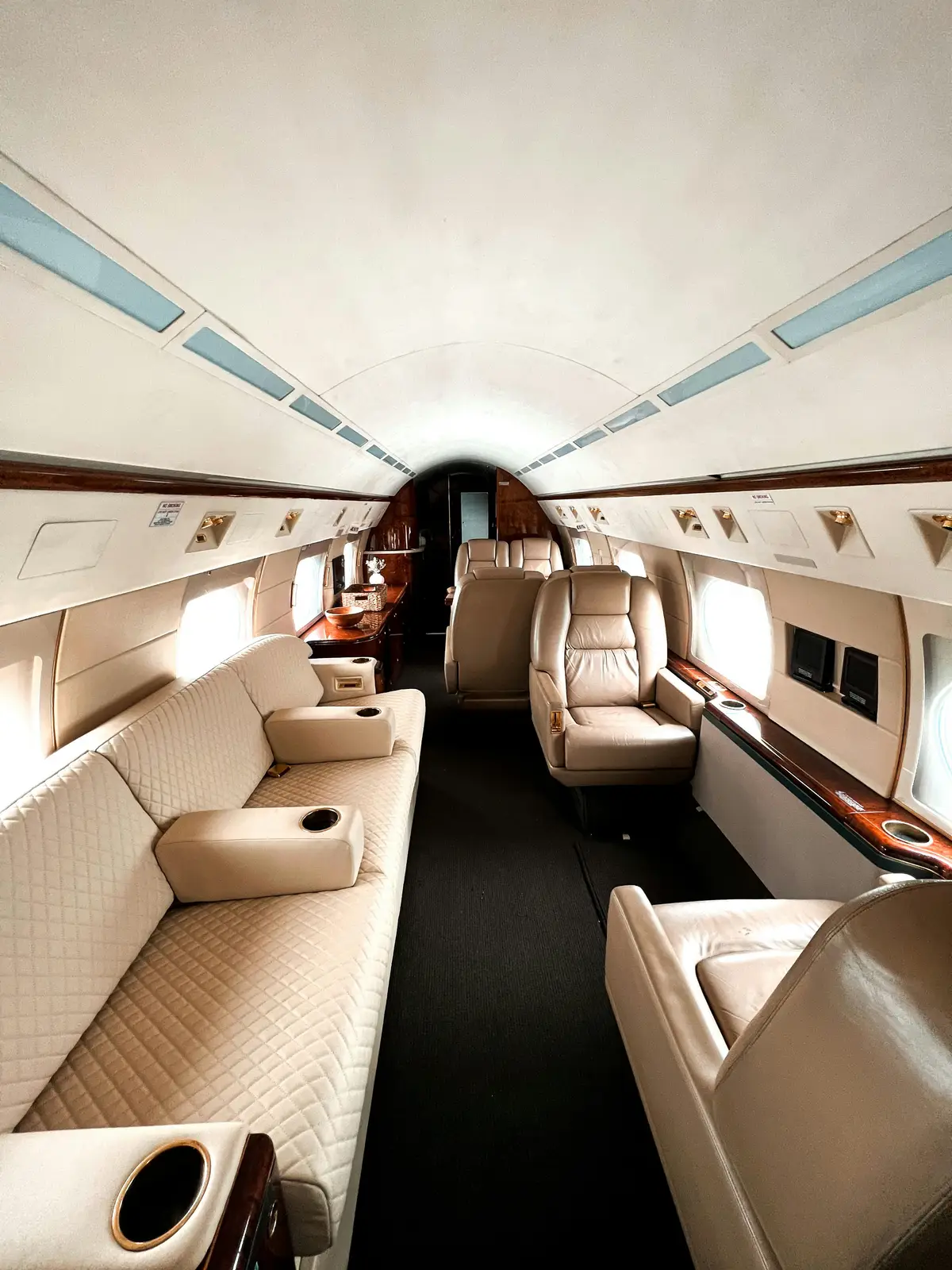
Ask how the ten travellers will actually occupy the cabin. A diagram can show whether two people face backwards, whether a divan is used as seats and whether everyone can reach a table or lavatory comfortably. A family may welcome a shared lounge layout; an executive group may prefer distinct work positions.
The load calculation is dynamic. Ten people, luggage and fuel for a long route may limit an aircraft that could take ten people on a shorter hop. Give us realistic baggage and passenger weights where the operator requests them. We will treat the operator's confirmed performance assessment as decisive.
Decide whether everyone should travel together
Ten passengers may be colleagues with laptop bags, or two families with children and a week's holiday luggage. Those are different aircraft requirements despite the identical headcount. Give us the ages of children where relevant, the number of full-size cases and any equipment dimensions so the operator can assess a realistic cabin and payload.
Ask how the seats are arranged. A published ten-seat capacity may include configurations that are less comfortable for a long sector or a working group. If the party wants to dine together, discuss that explicitly. If some guests need to rest, check the actual cabin layout rather than assuming a certain aircraft category will provide suitable sleeping positions.
One larger aircraft can keep the party and itinerary together. Two smaller aircraft may be worth examining when guests depart from different cities or need different return times. They also introduce two separate operating plans and potentially different arrival times. Compare the complete passenger experience and ground arrangements, not just the aircraft count.
If the final number may be nine or eleven, say so at the enquiry stage. That change can materially affect the aircraft shortlist. Private Flights can prepare options around the realistic group size and explain which details must be fixed before a firm proposal is accepted.
Frequently asked questions
Can ten people always fly together on a private jet?
Many aircraft can seat ten, but availability, approved layout, load and route must be confirmed for the specific flight.
Is a ten-seat aircraft comfortable for ten adults?
It depends on the cabin layout and flight length. Review the individual seating plan before accepting.
Can we bring ten large suitcases?
Do not assume so. Provide item counts, dimensions and weights so the operator can confirm stowage.
Request group options
Send Private Flights your passenger count, route, luggage list and preferred cabin arrangement. We can present a clear comparison of suitable charter options. Plan your group charter.
Image Attribution:
Photo by Katie Cerami via Pexels, used under the Pexels License.